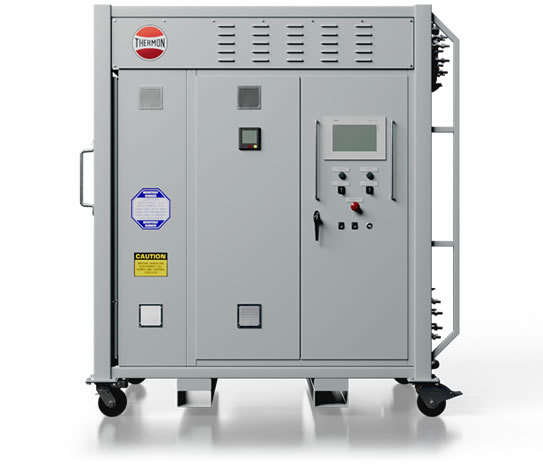
Description
Liquid Load Banks for Data Center & HPC Commissioning
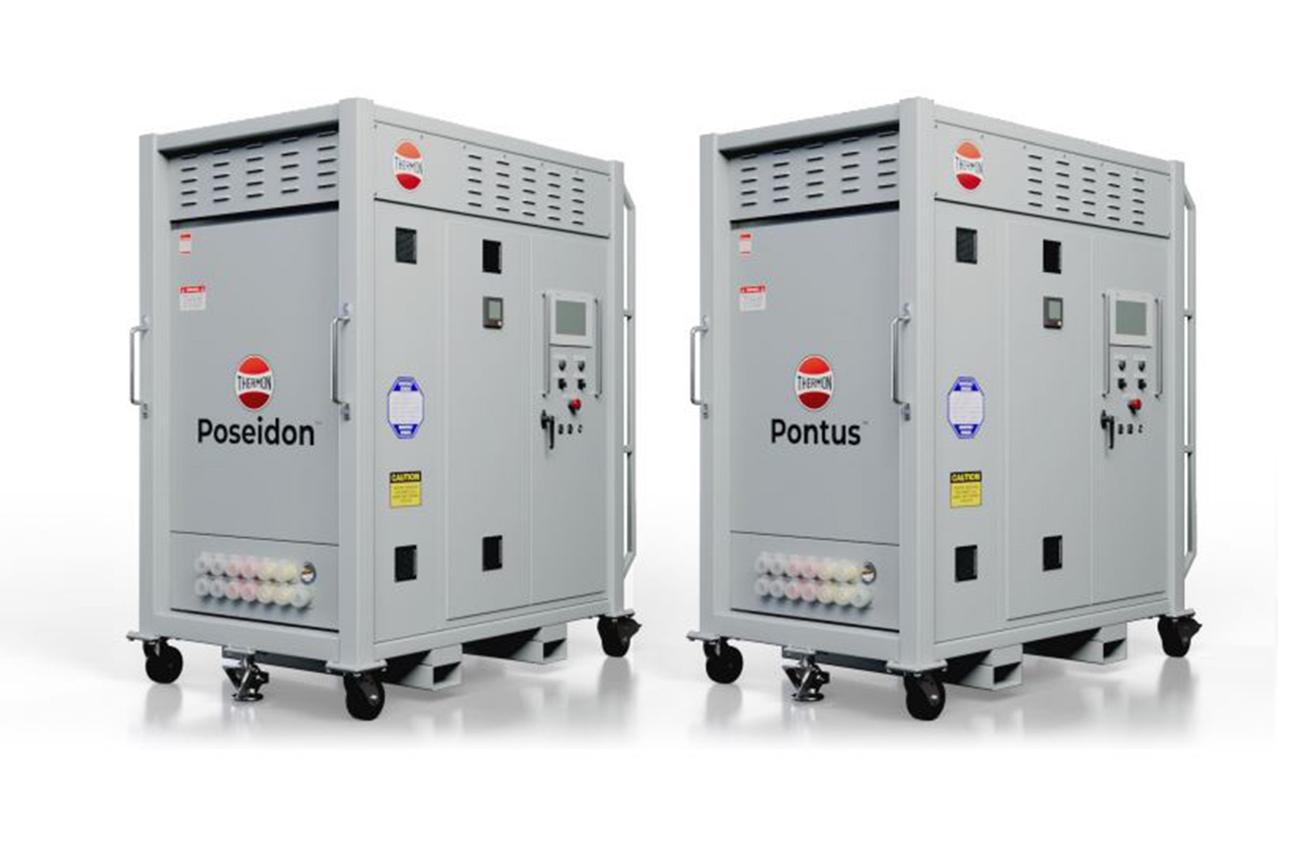
Thermon Liquid Load Banks are purpose-built testing systems designed for data center and High-Performance Computing (HPC) commissioning. The systems simulate realistic thermal and electrical loads so that critical cooling and electrical infrastructure can be validated before live IT equipment is placed into operation.
Thermon offers two main versions:
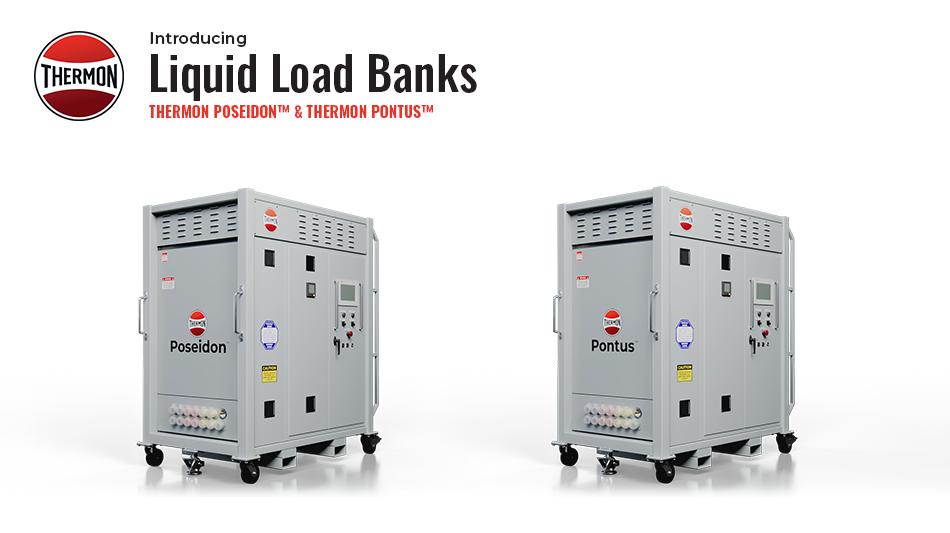
- Poseidon™ Liquid Load Bank — designed for the U.S. market
- Pontus™ Liquid Load Bank — designed for non-U.S. markets
These systems are intended to provide controlled, repeatable load conditions for commissioning and integrated systems testing.
Why Liquid Load Banks Are Important for Data Centers
Modern HPC and AI data centers are increasingly using liquid cooling because of the high heat density generated by advanced computing equipment.
Before servers are installed, commissioning teams need to verify that the cooling and electrical infrastructure can handle the expected load.
A liquid load bank provides a controlled way to introduce thermal and electrical demand into the system.
Instead of exposing expensive IT equipment to an unproven cooling or electrical system, the facility can first test the infrastructure using a dedicated load bank.
Thermon describes its liquid load banks as systems that simulate the thermal output of active servers while drawing electrical power from the facility.
Poseidon™ and Pontus™ Liquid Load Banks
Thermon’s liquid load bank portfolio consists of two product platforms.
| Model | Market | Main Purpose |
|---|---|---|
| Poseidon™ | U.S. | Data center & HPC commissioning |
| Pontus™ | Non-U.S. | Data center & HPC commissioning |
The principal difference is the regional certification and configuration approach.
Poseidon™
Poseidon is intended for U.S. installations and is designed around U.S. requirements including ASME, NEC, ANSI and UL.
Pontus™
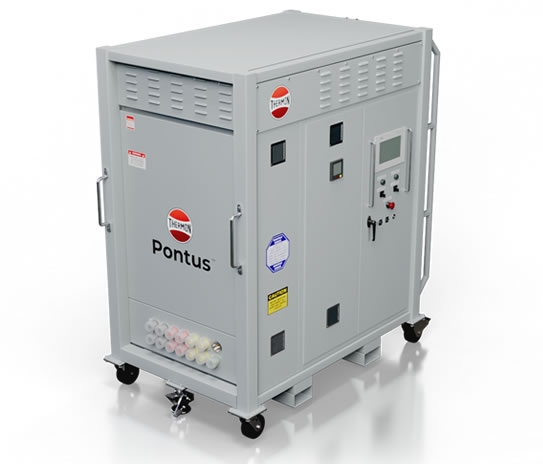
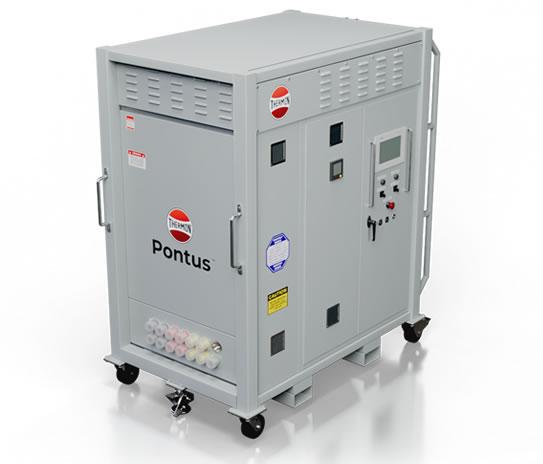
Pontus is intended for international/non-U.S. installations and supports standards and certifications including CRN, CE Mark, PED and ASME. Thermon also states that Pontus can be custom engineered for additional regional requirements.
Main Applications
Thermon identifies several critical data center systems that can be tested with its liquid load banks.
Coolant Distribution Units – CDU
Coolant Distribution Units (CDUs) are central components of liquid-cooled data centers.
A liquid load bank can introduce a controlled thermal load into the cooling circuit, allowing commissioning teams to verify:
- Flow performance
- Temperature control
- Heat-transfer capability
- CDU operation
- Control-system response
- Alarm functionality
Thermon specifically lists CDUs among the critical systems supported by its liquid load banks.
Chillers and Cooling Towers
The liquid load bank can also be used to test mechanical cooling infrastructure such as:
- Chillers
- Cooling towers
- Pumps
- Cooling loops
By introducing a controlled thermal demand, the commissioning team can evaluate how the cooling system performs under realistic operating conditions.
UPS Systems
The system can also support validation of Uninterruptible Power Supplies (UPS).
The liquid load bank provides a controllable electrical demand, allowing the facility to verify UPS performance without connecting live IT equipment.
Backup Generators
Backup generators are another critical system that can be tested under realistic load conditions.
This allows commissioning teams to evaluate generator response and facility power infrastructure before the data center enters normal operation.
Thermal and Electrical Load Simulation
A major advantage of Thermon’s liquid load bank is that it can simultaneously support testing of thermal and electrical infrastructure.
This is particularly valuable for modern liquid-cooled data centers because the cooling and electrical systems are closely interconnected.
Thermon describes the systems as providing realistic thermal and electrical demand simulation for mission-critical validation.
The overall concept can be represented as:
Electrical Power → Liquid Load Bank → Heat Generation → Cooling System → Heat Rejection
This allows the commissioning team to evaluate the complete thermal path under controlled conditions.
Adjustable Heat Load
Thermon’s data center materials identify heat-duty regulation by specific kW input or percentage of available load.
This allows the commissioning team to progressively increase the simulated load rather than immediately operating the facility at maximum capacity.
For example, testing can be performed at different load levels to evaluate system behavior under:
- Low load
- Medium load
- High load
- Maximum available load
This provides a more comprehensive picture of system performance.
Capacity
The current Thermon product information identifies liquid load bank capacities up to approximately 640 kW at 480 V.
The product page lists:
- 574 kW at 415 V
- 640 kW at 480 V
Thermon’s current page also identifies capacity ratings up to 600 kW, while the product datasheet specifies the 640 kW maximum configuration at 480 V.
Therefore, the exact capacity should be selected according to the voltage and required test load.
Siemens SIMATIC HMI
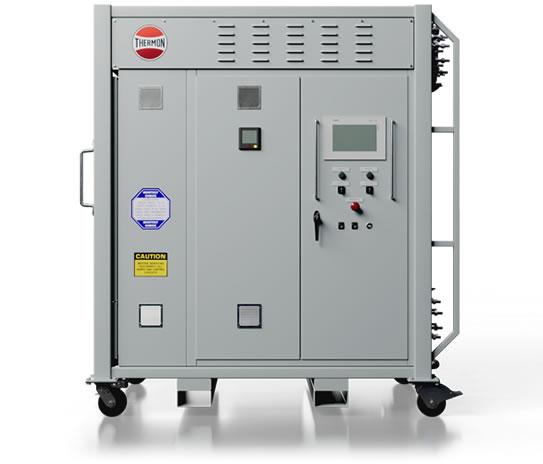
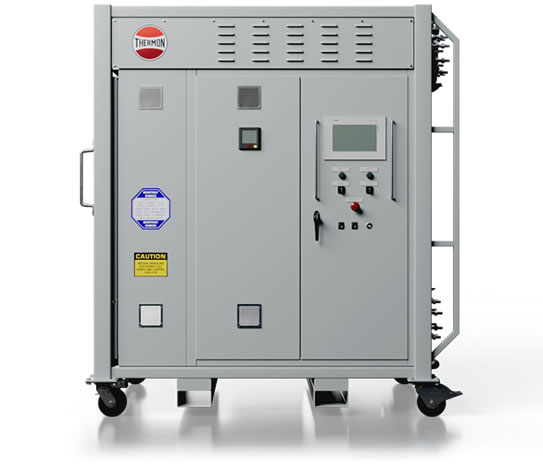
Thermon’s liquid load banks incorporate a 9-inch Siemens SIMATIC HMI KTP900 for operator control.
The HMI provides a convenient interface for controlling and monitoring the load bank during commissioning.
The system provides real-time temperature indication directly through the HMI.
Thermon’s data center materials also identify monitoring of:
- Temperature
- Pressure
- Flow
- Load
through the control interface.
Comprehensive Safety Features
Because liquid load banks combine high electrical power, heated fluid and pressurized/flowing cooling circuits, safety features are an important part of the design.
Thermon lists:
- Mushroom emergency-stop button
- Pilot light
- ON/OFF power switch
- Audible alarm
- High-temperature alarm
- Low-flow alarm
- Low-water alarm
- kW limiting switches
These features help operators identify abnormal operating conditions and safely shut down the equipment when required.
kW Limiting Switches
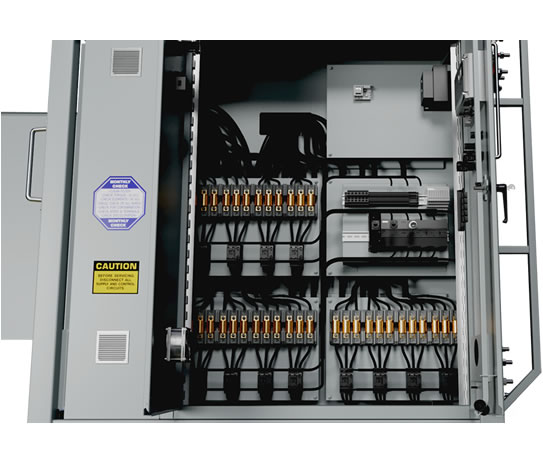
Each load stage includes a kW limiting switch with toggle control.
This allows the operator to control the amount of electrical load being applied during the test.
This staged approach is useful during commissioning because the facility can progressively increase the simulated IT load and observe the response of the cooling and electrical systems.
CDU and PDU Compatibility
Thermon specifically identifies the liquid load banks as compatible with:
- CDU – Coolant Distribution Unit
- PDU – Power Distribution Unit
This allows the equipment to be integrated into both the thermal and electrical commissioning processes.
Compact and Mobile Design
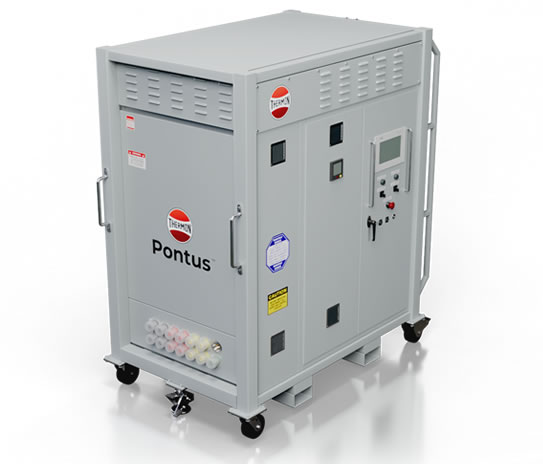
The liquid load bank is designed as a modular and mobile testing system.
Thermon specifies a compact overall footprint of approximately:
43″ W × 72″ L × 75″ H
The product page lists a dry weight of approximately 2,500 lb, while the current datasheet lists 1,500 lb (680 kg). Because Thermon’s web page and datasheet currently show different weight figures, the final shipping/handling weight should be confirmed with Thermon for the exact configuration.
The unit incorporates:
- Forklift pockets
- Lifting-shackle provisions
- Heavy-duty casters
- Extended handles
- Grab bars
These features allow the load bank to be transported and repositioned around the data center during commissioning.
Dual Camlock Connections
Thermon’s liquid load banks incorporate dual Camlock connecting capabilities.
This provides flexibility when connecting the load bank to the facility’s cooling circuit during commissioning.
The connection arrangement should be coordinated with the project’s CDU/CDX and temporary commissioning piping configuration.
High-Performance Heating Elements
The internal heating system uses a tighter element pitch and higher heat duties to achieve high thermal output within a compact footprint.
Thermon identifies this design as one of the key features contributing to the performance of its liquid load banks.
The result is a compact system capable of producing a substantial controlled thermal load for data center testing.
Fiberglass Insulation
The load bank incorporates a fiberglass insulation blanket.
This provides two important benefits:
- Helps retain heat within the system.
- Helps improve operator safety by reducing exposed hot surfaces.
Thermon specifically identifies the insulation blanket as an enhanced safety and efficiency feature.
Rigid Steel Frame
The liquid load bank uses a rigid painted steel frame with extended handles and grab bars.
This construction is intended for repeated movement and use during commissioning activities in demanding data center environments.
Typical Commissioning Sequence
A typical application can be structured as follows:
1. Connect the Liquid Load Bank
The load bank is connected to the facility’s liquid-cooling circuit.
2. Connect Electrical Supply
The load bank is connected to the electrical system being tested.
3. Establish Required Flow
The cooling circuit is started and the required flow is established.
4. Apply Initial Load
A low electrical/thermal load is applied.
5. Increase Load
The operator progressively increases the load using the load-stage controls.
6. Monitor Performance
Temperature, flow, pressure and other system parameters are monitored.
7. Verify Cooling Response
CDUs, chillers, pumps and heat-rejection systems are evaluated.
8. Verify Electrical Response
UPS, PDU, switchgear, generators and backup systems can be evaluated under load.
This approach allows the facility to identify problems before live IT equipment is introduced.
Why Liquid Load Banks Are Critical for AI Data Centers
The growth of AI and high-performance computing is driving higher rack power densities and increasing adoption of liquid cooling.
Thermon states that the transition toward liquid-cooled data centers is creating increasing demand for liquid load banks to validate both cooling and power infrastructure.
Thermon reported in April 2026 that its liquid-load-bank quoting pipeline had exceeded $100 million, reflecting strong demand for this type of commissioning equipment.
This makes liquid load banks increasingly important as part of modern AI/HPC data center commissioning.
Main Benefits
Realistic Load Simulation
Simulates thermal and electrical demand without requiring live servers.
Reduced Commissioning Risk
Allows facility problems to be identified before expensive IT equipment is installed.
Cooling-System Validation
Supports testing of CDUs, chillers, pumps and related cooling infrastructure.
Electrical-System Validation
Supports UPS, PDU, switchgear and generator testing.
Mobile Design
Heavy-duty casters, forklift pockets and lifting provisions allow the unit to be repositioned.
Controlled Testing
Load stages and kW limiting controls allow gradual application of load.
Integrated Monitoring
Siemens HMI provides operator control and real-time temperature indication.
Technical Specifications
| Attribute | Specification |
|---|---|
| Brand | Thermon |
| Product Family | Liquid Load Banks |
| US Model | Poseidon™ |
| Non-US Model | Pontus™ |
| Application | Data Center / HPC Commissioning |
| Primary Function | Thermal & Electrical Load Simulation |
| Capacity | Up to 640 kW @ 480 V |
| Output @ 415 V | 574 kW |
| HMI | 9″ Siemens SIMATIC KTP900 |
| Load Control | kW Limiting Switches |
| Connection | Dual Camlock |
| Compatibility | CDU / PDU |
| Safety | E-Stop / Alarms / Pilot Light / Low Flow / Low Water |
| Dimensions | 43″ W × 72″ L × 75″ H |
| Mobility | Casters / Forklift Pockets / Lifting Provisions |
| Frame | Painted Steel |
| Insulation | Fiberglass Blanket |
| US Standards | ASME / NEC / ANSI / UL |
| International Standards | CRN / CE / PED / ASME |
| Application | AI Data Center / HPC / Liquid Cooling Commissioning |
Specifications are based on Thermon’s current product page and product datasheet.
Poseidon vs. Pontus
| Feature | Poseidon™ | Pontus™ |
|---|---|---|
| Market | U.S. | Non-U.S. |
| Main Application | Data Center / HPC | Data Center / HPC |
| Thermal Load Simulation | Yes | Yes |
| Electrical Load Simulation | Yes | Yes |
| CDU Compatible | Yes | Yes |
| PDU Compatible | Yes | Yes |
| ASME | Yes | Yes |
| UL | Yes | — |
| NEC | Yes | — |
| ANSI | Yes | — |
| CRN | — | Yes |
| CE Mark | — | Yes |
| PED | — | Yes |
| Custom Regional Certification | — | Available |
Thermon states that Poseidon is configured for U.S. requirements, while Pontus is designed for non-U.S. markets and can be custom engineered for additional regional standards.
Product Attributes
| Attribute | Value |
|---|---|
| Brand | Thermon |
| Product | Liquid Load Bank |
| Models | Poseidon™ / Pontus™ |
| Industry | Data Center / HPC |
| Primary Function | Thermal & Electrical Load Simulation |
| Capacity | Up to 640 kW @ 480 V |
| Voltage | 415 / 480 V configurations |
| HMI | Siemens SIMATIC KTP900 |
| Load Stages | Adjustable |
| Cooling Interface | Liquid / CDU Compatible |
| Electrical Interface | PDU Compatible |
| Connection | Dual Camlock |
| Mobility | Mobile / Modular |
| Temperature Monitoring | Yes |
| Flow Monitoring | Yes |
| Safety Alarm | Yes |
| E-Stop | Yes |
| US Certification | ASME / NEC / ANSI / UL |
| International Certification | CRN / CE / PED / ASME |
| Application | Data Center Commissioning / HPC / AI Infrastructure |