Introduction to HVAC Valves
Advanced Valve Solutions for Modern HVAC Systems
In today’s energy-conscious buildings and industrial facilities, efficient hydronic system performance is essential. Specialized HVAC valves play a critical role in achieving precise flow control, energy savings, and system optimization.
Key Valve Types:
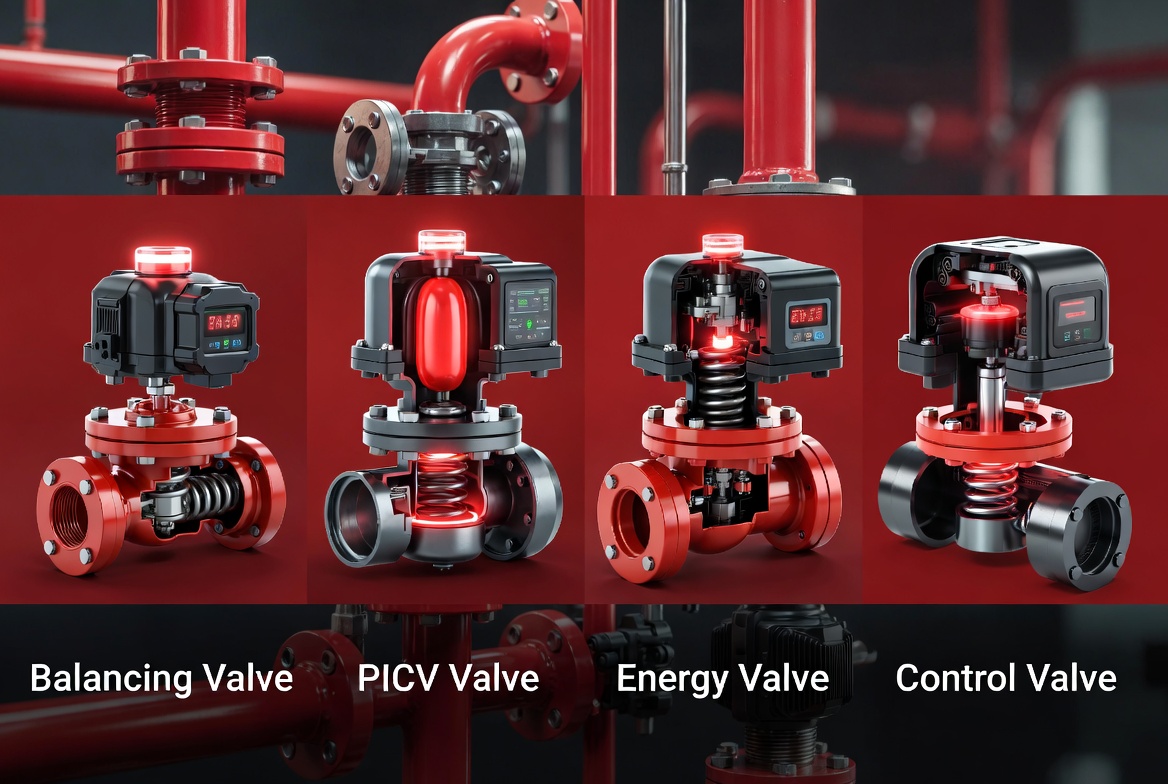
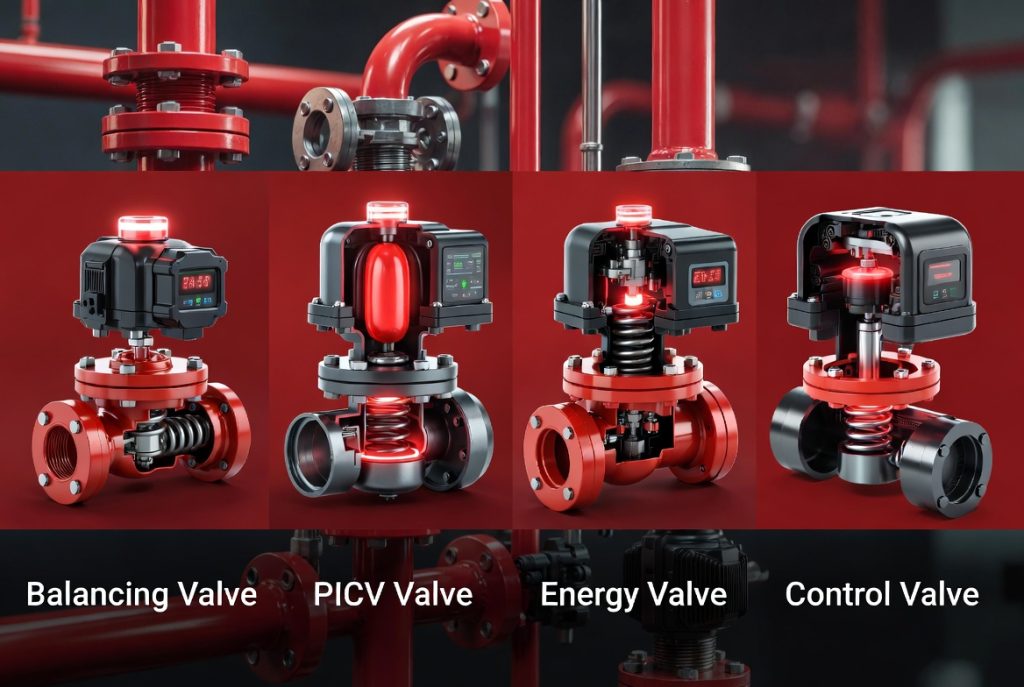
1. Balancing Valve Balancing valves are manual or automatic valves designed to regulate and balance water flow across different branches of a hydronic system. They ensure that each terminal unit (such as fan coil units, chillers, or heat exchangers) receives the correct flow rate, improving overall system efficiency and comfort.
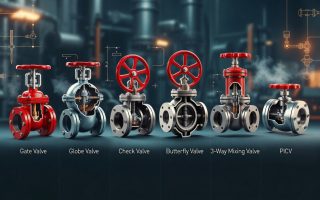
2. PICV – Pressure Independent Control Valve PICV valves combine flow control and pressure regulation in a single unit. They automatically maintain a constant flow rate regardless of pressure fluctuations in the system. This makes PICV the preferred choice for variable flow HVAC systems, significantly reducing energy consumption and simplifying system commissioning.
3. Energy Valve The Energy Valve is an advanced smart valve that integrates flow measurement, temperature measurement, and control functions. It provides real-time energy monitoring and optimization, allowing facility managers to maximize energy efficiency while maintaining precise temperature control. It is ideal for high-performance buildings aiming for LEED or WELL certification.
4. Control Valve Control valves work with actuators to modulate flow in response to signals from the Building Management System (BMS). They are essential for accurate temperature regulation in heating and cooling circuits.
Benefits of Modern HVAC Valves:
- Significant energy savings through precise flow control
- Simplified system design and commissioning
- Reduced pumping costs
- Improved indoor comfort and temperature stability
- Real-time monitoring and data for predictive maintenance
- Lower total cost of ownership
Whether for new construction or retrofit projects, our range of HVAC valves delivers reliable performance, smart connectivity, and long-term efficiency for commercial buildings, hospitals, data centers, and industrial facilities.